
"foreign influence on Chinese coffee"
300 article(s) found

Planting Environment and Coffee Quality in Pu 'er District, Yunnan Province, China
Harvest season Yunnan coffee producing area-Pu 'er planting environment and coffee quality Natural environmental climatic factors are prerequisites for coffee cultivation and growth. Coffee trees grow only in tropical and subtropical areas between 25 degrees north and south latitude, which are often referred to as coffee growing belts or coffee producing areas. Pu 'er City is located between 2202-2450 N, 9910-10220 E, and back north

The encounter between Zhou Enlai and the Cafe of Flowers in Paris
The Flower Cafe, located at 172nd St. Germain Street in the sixth arrondissement of Paris, was built in 1887 because there was a statue of the ancient Roman goddess Flore in front of the door. (file photo) Planet Ye took out a map of Paris to mark the footprints of Zhou Enlai that year. Oral history narrator: Ye Planet Zhou Enlai, president of the French European History Society, in the 13th arrondissement of Paris in the 1920s.

The final of the 4th China barista skills Competition was held in Guangzhou.
Professional coffee knowledge exchange more coffee bean information Please follow Coffee Workshop (Wechat official account cafe_style) the fourth China barista skills Competition, the most professional national competition in the domestic coffee industry, was held in Sany International Food City in Guangzhou from the 27th to 28th. Nearly 100 excellent baristas from Hainan, South China, East China and Shandong competed together. Chinese barista

The history of coffee in Taiwan: most of it is inherited from the Japanese era
Professional barista communication Please pay attention to the coffee workshop (Wechat official account cafe_style) most of Taiwan's coffee history is inherited from the Japanese era, although the early Dutch and British once occupied Taiwan, but did not leave much historical traces about coffee. Coffee trees were also planted during the Japanese occupation era, and the Japanese Industry Bureau introduced coffee from Hawaii in order to develop cash crops.

Can Arabica coffee beans be made by hand? the taste of price producing area is introduced.
Arabica coffee is deeply loved by Chinese people with a short history of coffee contact because of its strong fruity aroma. it was introduced to China by missionaries in the 19th century. It is widely planted in Panzhihua, Sichuan, and the dry-hot valley of the Jinsha River, which is more than 1000 meters above sea level in western Yunnan. The sunshine time in this area is long and the temperature difference between day and night is great. The local people use the way of diverting water up the mountain to solve the lack of seasonal rainfall.

What are the design styles of the cafe?
Professional coffee knowledge exchange more coffee bean information please follow the coffee workshop (Wechat official account cafe_style) when Starbucks is no longer the exclusive darling of petty bourgeoisie, as coffee culture gradually develops into the daily life of the public, more and more people dream of opening a coffee shop, unwittingly, chain coffee shops are springing up like bamboo shoots after a spring rain, and all kinds of unique cafes are scattered in the city for a while.

What is the future of barista industry and whether it is worth developing
Since the reform and opening up, with the improvement of people's living standards and the deepening of exchanges between China and western countries, the coffee industry has accelerated its development. Coffee chain stores of world famous brands have entered the mainland of China one after another to seize Chinese cities

What are the flavor characteristics of Darjeeling, Assam, Qimen and Ceylon black tea?
Darjeeling, Assam, Qimen and Ceylon many people taste black tea in coffee shops, teahouses and restaurants, even if they can understand the names of black tea listed on the menu, but they know nothing about its taste, aroma and even its compatibility with food. Not only that, the waiter will then ask, "would you like milk or lemon?" "generally speaking, people who know nothing about black tea
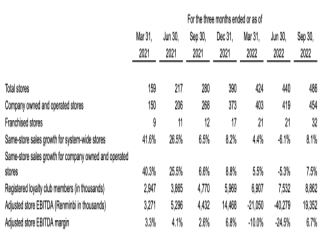
Net income 306 million! Tims listed in China reported a substantial increase in the first quarter
Professional coffee knowledge exchange more coffee bean information please follow the coffee workshop (Wechat official account cafe_style) more boutique coffee beans please add private Wechat Qianjie coffee, WeChat: qjcoffeex today, the famous coffee chain TimHortons China announced 2022
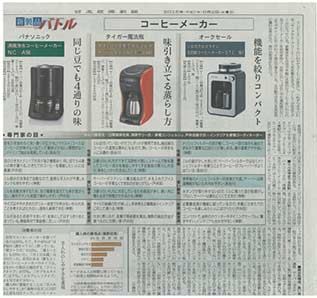
You'll never find a smaller bean grinder.
Two days ago, a message about the launch of a new product caused a lot of repercussions in moments: a coffee machine that has created a sales myth in Japan will officially go on sale in China on the 20th. The new mini automatic bean grinder has sold 200000 units in Japan in the past six months. You know, only 600000 household coffee machines are sold in Japan in a year.

Starbucks coffee is inspired by Italy, but do you understand the essence of espresso?
Professional baristas please follow the coffee workshop (Wechat official account cafe_style) [introduction] Coffee lovers all know that Starbucks coffee is inspired by Italy, and the most common coffee on the Starbucks menu: ESPRESSO, LATTE, CAPPUCINNO, MACCIATO are all Italian, cup-shaped TALL, GRANDE, VENTI, TRENTA are also Italian, meaning

Analysis on the Prospect of China's Coffee Industry what is the current situation of the domestic coffee industry?
Introduction: maturity is not the aging of the heart, but tears in the eyes, but also can keep smiling. The pleasure of coffee lies in its taste, utility and atmosphere. More and more people choose coffee to accompany themselves to spend a lot of cozy time. Just made coffee, send out this rich fragrance, that kind of attractive aroma, fresh and intoxicating. After getting up in the morning, have a drink to wake up and work during the day.

The respective expressions and questions of the introduction years of Zhukula Coffee in Chinese Coffee Culture
1.1 I remember that it was still the spring of 1995, when Professor Mao Genhai of the former South China Hot farming Academy and I went to Xishuangbanna, Yunnan Province. I had the honor to see Huang Junxiong and Zhang Xingcan, Institute of Tropical and Subtropical Coffee, Yunnan Academy of Agricultural Sciences, published a paper on the development of Yunnan coffee in 1994 in the third issue of Tropical crop Science and Technology, from which we got the information about the earliest introduction of Yunnan coffee.

How about Yunnan coffee beans in Yimutian boutique coffee farm
Following Cafe Review (Wechat official account vdailycom) found that Beautiful Cafe opened a small shop of its own. According to Coffee International, the quality of Yunnan small grain coffee is very close to that of the world's best Colombian small grain coffee. At present, the futures price of coarse coffee on the international market is falling, while the price of small-grain coffee continues to rise. Yunnan has unique natural conditions for the production of small grains of coffee.

On the Industry Enlightenment brought by the closure of "Coffee with you"
In the recent period of time, the biggest news in the field of domestic chain franchise is the number of well-known coffee brands that have gone out of business one after another. Many people did not expect that the once amazing expansion momentum of the brand, which once aimed at breaking thousands of stores in 2015 and planning to launch a new third board, had fallen into such a declining situation almost overnight. Besides,

Li Haitao: the "one, two, three" strategy helps the development of Pacific Coffee Enterprises
According to statistics, the coffee industry is growing at an annual rate of 25%. It is estimated that by 2020, the capacity of China's coffee market will reach 300 billion, which is expected to become an important increase in the catering industry. As a result, a large number of chain coffee brands have appeared in China, deducing their imagination of the Chinese coffee market. At the same time, Pacific Coffee (Special Reading) has been in mainland China for 6 years.

The introduction of Ruili Jingpo Nongxian coffee was recorded in 1914.
In April 1996, compiled by the compilation Committee of Ruili City Chronicles of Yunnan Province, the fifth coffee section on page 383 of Ruili City Chronicles published by Sichuan Dictionary Publishing House recorded that as early as 1914, the Jingpo nationality had been introduced from Myanmar to Nongxian Township for cultivation. The local series of books of the people's Republic of China, Records of Yunnan Province, Volume 39, Records of Land Reclamation, Chapter 3, Section 2, Coffee is recorded: the cultivation of coffee in China began in 1884.

History of introduction and expansion of Coffee in early China (1)
1. The introduction of Ruili Jingpo Nongxian Coffee was recorded in 1914. In April 1996, it was compiled by the compilation Committee of Ruili City Chronicles of Yunnan Province. The fifth coffee section on page 383 of Ruili City Chronicles published by Sichuan Dictionary Publishing House recorded that as early as 1914, the Jingpo people have been introduced from Myanmar to Nongxian Township for cultivation. Yunnan Provincial Chronicles, Volume 39, Chapter 3 of the Local Series of the people's Republic of China

How to open a successful coffee franchise?
In 2014, the catering market is still hot. Many investors encounter some problems on the way to start a business, so entrepreneurs need to think from many aspects if they want to work with the Imperial Palace project to better create business opportunities in this industry. Nowadays, there are all kinds of coffee shops and the competition is fierce. So how to open a successful coffee shop franchise? People in the industry think

Experience in cafes all over the world Cafe Prokopu, France
In addition to being suitable for romance, cafes are also rich in creativity, inspiration, theory and everything related to ideas, not only because coffee itself is brain-exciting and energetic, but also because it has a continuous tradition. It is said that the world's first cafe, called Kiva Han, opened in Mecca in 1475. Subsequently, coffee was introduced to Egypt, North Africa,